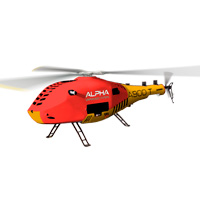


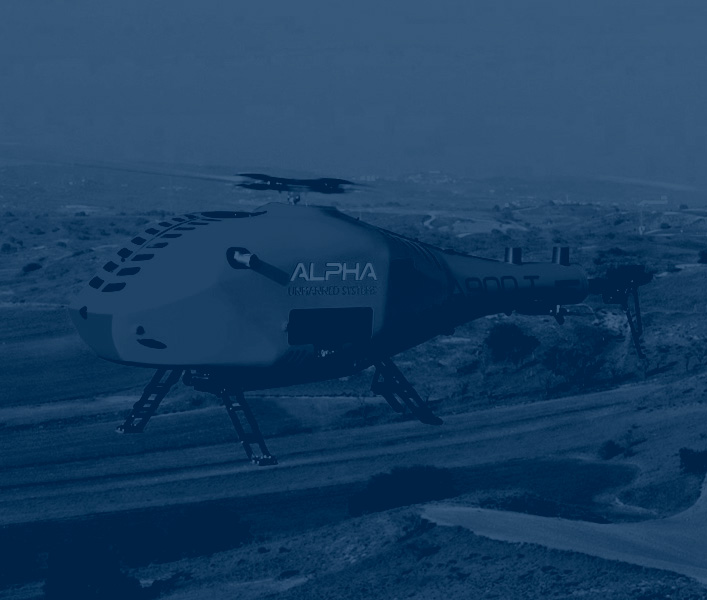
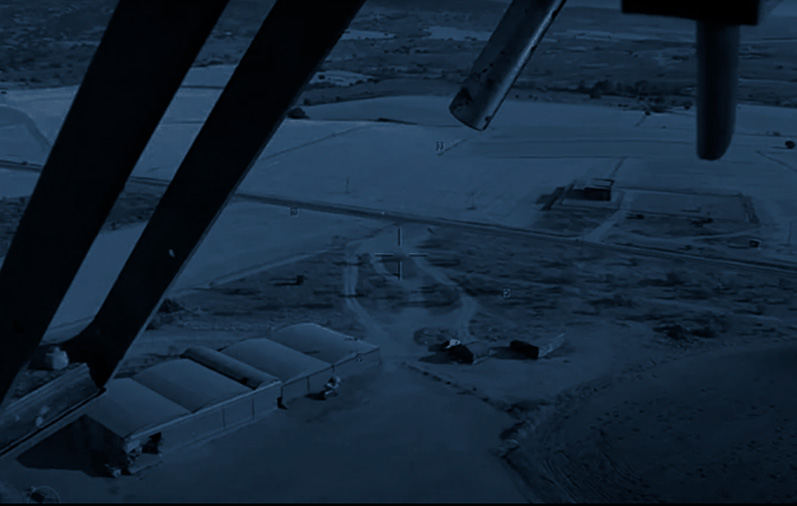



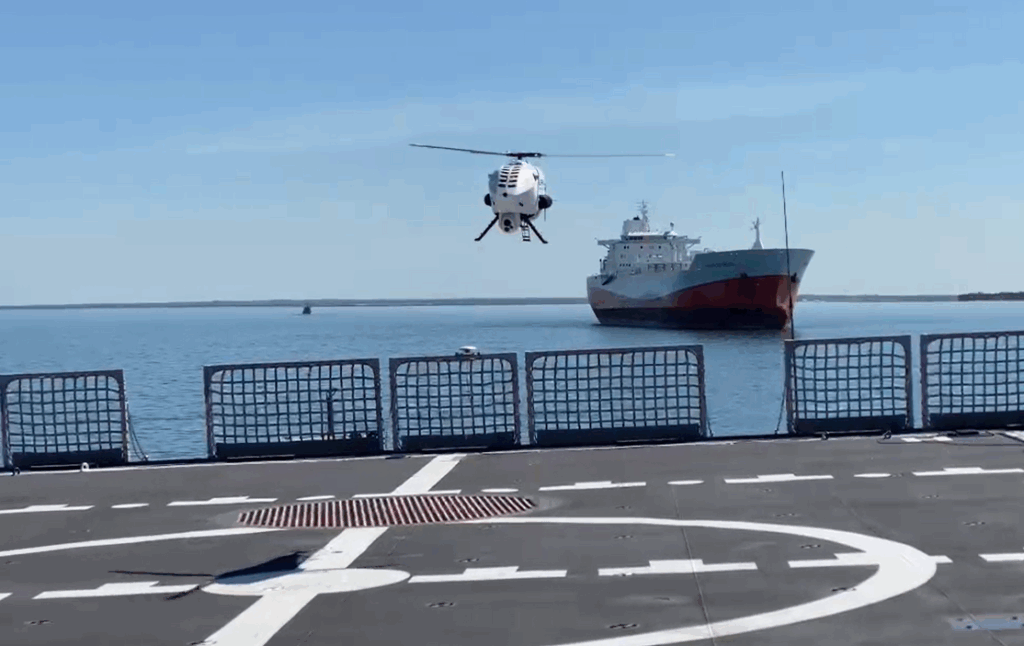
Visual surveillance isn’t always enough when monitoring what’s happening at sea with Unmanned Aerial Vehicles, especially when ships are out of camera range or are positioned beyond the horizon. But with onboard AIS sensors, UAVs can covertly operate at altitude and pick up ship data from over 30 kilometers away, complementing cameras and other payload sensors. AIS vessel tracking greatly enhances the visual surveillance capabilities of UAVs on maritime or coastal patrol missions.
In this post, we explore what the Automatic Identification System (AIS) is, how it works, and how AIS radar modules can enhance UAV surveillance operations in maritime domains.
What is AIS?
The Automatic Identification System (AIS) is a globally adopted, and in most cases mandatory, maritime safety system that acts as an ocean traffic tracker based on data received from onboard transceivers.
Most larger vessels are required to carry an AIS transponder, which broadcasts key information including the vessel’s identity (via its MMSI), type (cargo, fishing, pleasure craft, etc.), position, speed, heading, and intended destination.
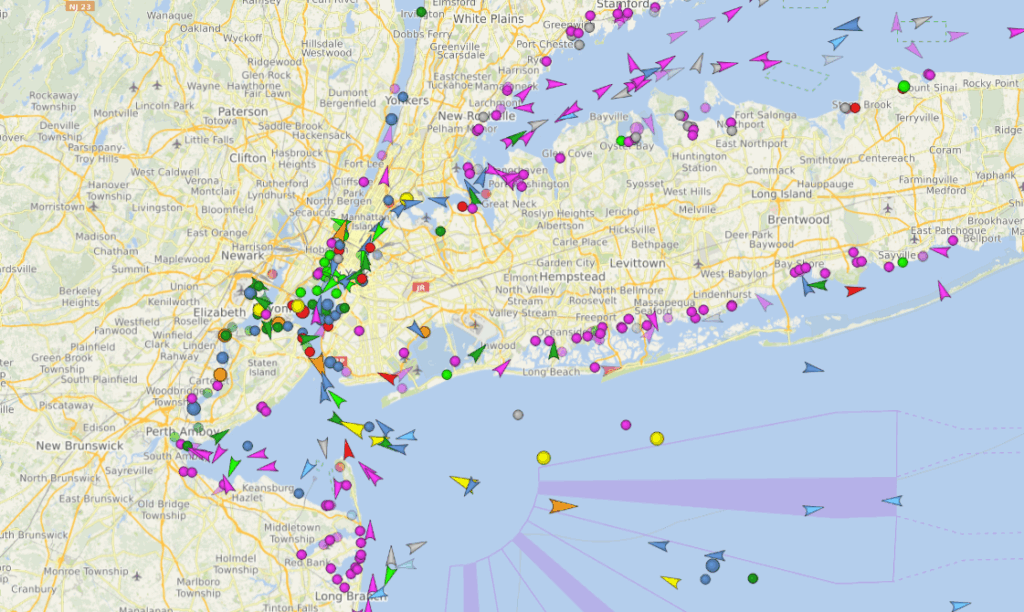
Originally designed for collision avoidance, AIS ship tracking now plays a crucial role in law enforcement, fleet monitoring, search and rescue coordination, and maritime surveillance. For coastguards, border patrols and naval units, AIS data offers real-time insights into marine traffic. It helps them identify anomalies such as suspicious activities or vessels deviating from declared courses or simply vessels that try to remain undetected by not using the AIS.
Why integrate AIS modules into UAVs?
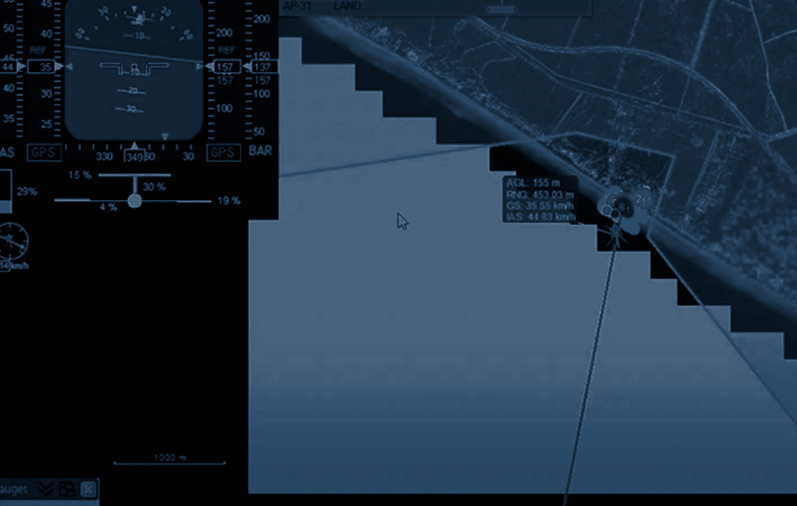
Mounting an AIS radar module on a UAV creates an airborne surveillance system that sees beyond the camera lens. It enables the detection and visualization of marine traffic across a wide area even before the UAV has visual contact. This information can be streamed and visualized through the Ground Control Station data link, allowing the UAV operator to see the positions of all transmitting vessels in range (typically up to 20–30 km).

This early situational awareness improves decision-making and accelerates tactical responses. UAVs can automatically turn their cameras toward objects of interest, assess whether a vessel’s actions align with its declared AIS profile, or locate suspicious “silent” vessels not transmitting at all.
AIS can also extend the surveillance capabilities of the “Command and Control Center” or land-based operations beyond the limitations of their traditional radar systems.
A flexible UAV enhancement with real tactical value
Alpha’s AIS Radar Module is built with real ISR operations in mind. With the AIS module onboard and the improved situational awareness it provides, UAVs become highly effective ISR assets for more proactive enforcement. The use cases for this technology are broad and of growing importance for UAV operators at sea, including:
- Maritime surveillance and reconnaissance
- Border security and anti-piracy patrols
- Illegal fishing and marine traffic monitoring
- Search & Rescue (SAR) coordination
- Scientific and environmental assessments
UAV platform agnostic, easily integrated.
One of the major strengths of the AIS radar module from Alpha is its plug-and-play design. It works seamlessly with any UXV platform (UAVs, UGVs, or USVs) without requiring complex integration or specialized hardware. The only hardware required are GPS and VHF antennas. The entire system weighs under 300 grams and consumes less than 5W of power, making it ideal for even small or payload-sensitive unmanned platforms.
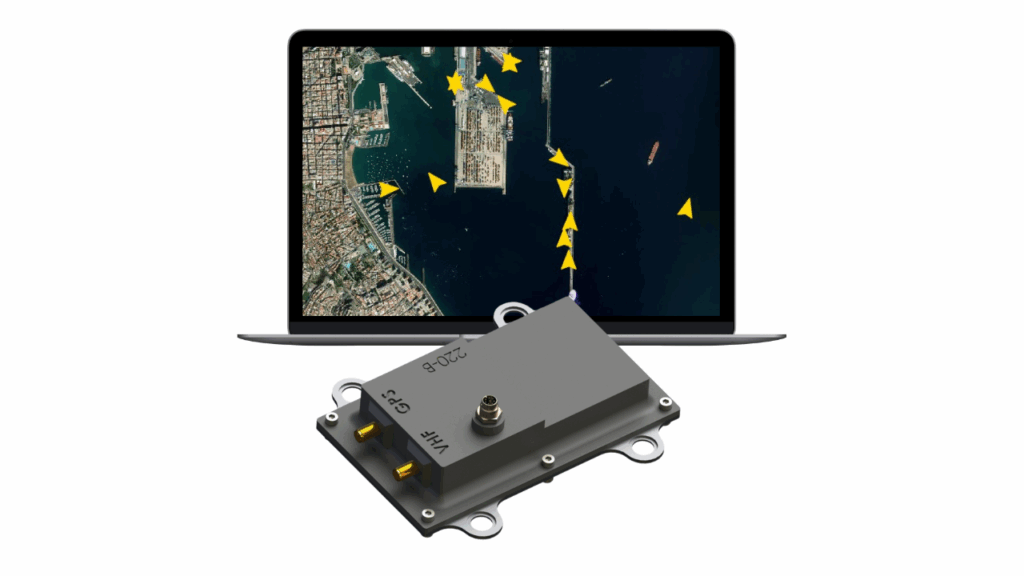
Switching between passive (silent) and active transmission modes is as simple as toggling a 0/5V signal. In silent mode, the UAV receives AIS signals without broadcasting its presence, which is perfect for covert operations.
When needed, the system can be switched to transmit, allowing friendly forces to locate the UAV via standard AIS vessel tracking tools without the need for additional network or telemetry data setups.
Intelligence-grade vessel data delivered in real time
Beyond basic tracking, our AIS module offers more advanced functionalities. Data is streamed in real time via Ethernet or serial output to the Ground or Vessel-Based UAV Control Station, allowing visual validation of AIS signal data against actual vessel behavior.
For example, if a vessel declares itself as a fishing boat but appears to be loitering near a military restricted area, the inconsistency can trigger immediate action.
This level of intelligence at sea makes the system valuable not only for better situational awareness, but as a powerful asset to activate a rapid tactical response
UAVs and AIS tracking for smarter Maritime Surveillance
Combining the versatility of UAV platforms with AIS ship tracking takes maritime situational awareness to another level. Lightweight, low-power, and easy to deploy, Alpha’s AIS Radar Module transforms UAV systems into valuable eyes in the sky that are both smart and stealthy.
Whether you’re protecting a coastline, monitoring shipping lanes, coordinating a SAR operation, or tracking potential smugglers, an AIS-equipped UAV can help your operation stay one step ahead.